
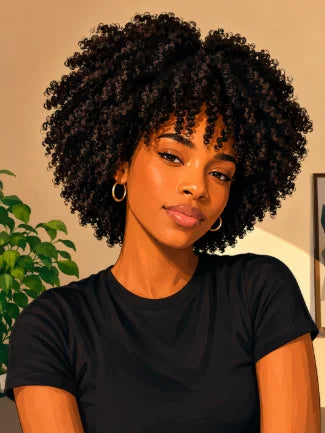

Coily hair is the most beautiful and the most demanding in terms of care. Its tight zigzag structure makes it structurally drier, more porous, and more fragile than any other texture. And yet, one well-mastered step can radically transform its condition: the leave-in.
The leave-in, or no-rinse cream, is the pivotal step in any serious coily hair routine. Applied after each wash, it seals in moisture, facilitates detangling, prepares curls, and minimizes breakage. Without it, even the best routine falls apart.
This guide explains why leave-in is essential for coily hair, how to choose it, and above all how to apply it correctly for visible results from the first few weeks.

The zigzag structure of kinky hair (types 4A, 4B, 4C) creates specific challenges that no other hair type experiences to this extent:
Chronic structural dryness. The natural sebum produced by the scalp cannot travel down a zigzag shaft in the same way it would on straight hair.
To go further with your hair routine, discover the sebum cure, a natural approach aimed at allowing hair to fully benefit from its natural protection.
High porosity. The cuticles of kinky hair are naturally more raised, meaning they absorb moisture quickly... but lose it just as fast. Without a sealing product, water evaporates within a few hours.
Mechanical fragility at the bending points. At each angle of the zigzag, the fiber is subjected to additional pressure. These areas are the first to break during detangling or styling without preparation.
Leave-in conditioner directly addresses these three problems: it provides the hydration that sebum cannot distribute, seals moisture inside the fiber, and creates the necessary slip for detangling without breakage.
Not all coily hair has the same needs. Some require more hydration, while others seek more softness or definition. The choice of leave-in therefore depends on the condition of the hair fiber, hair porosity, and the desired daily results.
A suitable product helps keep hair supple, easy to style, and less prone to breakage.
For younger ones, also consult our guide dedicated to coily hair routine for children.
The texture of a leave-in plays an important role in its ease of use. A lightweight formula spreads more easily throughout the hair and absorbs quickly without leaving a greasy or sticky residue. It also helps maintain the natural volume of kinky hair while facilitating daily styling and detangling.
To make applying leave-in easier, you can use a Flexi Curl Brush. It helps distribute the product evenly along the lengths while making it easier to detangle kinky hair.
The application technique is as important as the product itself. Here is the optimal method for kinky hair:
Step 1: Wash with a suitable shampoo Always start with a clean base. A shampoo that is too aggressive will dry out the hair fiber even before the leave-in is applied, reducing its effectiveness. Rinse thoroughly.
Step 2: Squeeze without rubbing Gently squeeze your hair section by section to remove excess water. Never rub with a terry towel; the friction lifts the cuticles and creates immediate frizz. Use a microfiber towel or a cotton t-shirt.
Step 3: Divide into at least 4 sections Kinky hair is dense. Working in large sections gives the illusion of saving time, but the product will not be distributed evenly. Divide into 4 to 6 sections to cover each strand correctly.
Step 4: Apply section by section to damp hair On each still-damp section, apply a generous amount of Protein Leave-in from the ends to the roots. The ends, being the driest, need the highest concentration of product. Smooth between your fingers to distribute evenly.
Step 5: Detangle carefully Detangle from ends to roots. The leave-in makes it easier for your fingers to glide through, limits breakage, and helps gently undo knots. Never detangle dry hair.
Step 6: Finish with styling gel Once the leave-in is applied and the curls are defined, seal with the Protein Styling Gel to set the definition, limit frizz, and create a protective barrier against ambient humidity.


Leave-in alone is not enough to permanently transform coily hair. Its effectiveness is multiplied when it is part of a coherent and regular routine:
Gentle shampoo → Protein treatment → Leave-in → Styling gel
Here's how each step complements the others:
Shampoo cleanses the scalp without stripping the hair fiber. The protein treatment strengthens the internal structure of weakened lengths. The leave-in seals in moisture and prepares the hair for styling. The gel sets and protects the achieved definition.
For styling, the Denman Curl Volumizer used on damp hair with freshly applied leave-in helps define curls and add volume to the roots without breaking the hair fiber.
Coily hair is not difficult to style. It simply requires the right techniques and products, applied in the correct order.
An effective coily hair routine relies on regular care to hydrate, strengthen, and protect the hair fiber. With a suitable routine, hair remains softer, stronger, and better protected against dryness.
Every wash, without exception. Kinky hair loses its moisture quickly; skipping the leave-in step, even once, shows on the condition of the lengths in the following days.
Yes, in small quantities on hair lightly misted with water. The ideal is to dilute a few drops of leave-in in a water spray and apply to the lengths to restore suppleness between washes.
Yes, provided you use it on very damp hair that has been treated with leave-in conditioner. On dry or insufficiently prepared hair, any brush will cause breakage on type 4 hair. With leave-in conditioner as a base, the Flexi Curl Brush detangles and defines without pulling.
This is often a sign of over-application or hair that isn't wet enough at the time of application. Spray more water before applying. Generally, once the hair is dry, the residue disappears. If the problem persists, consider a clarifying shampoo during your next wash.


