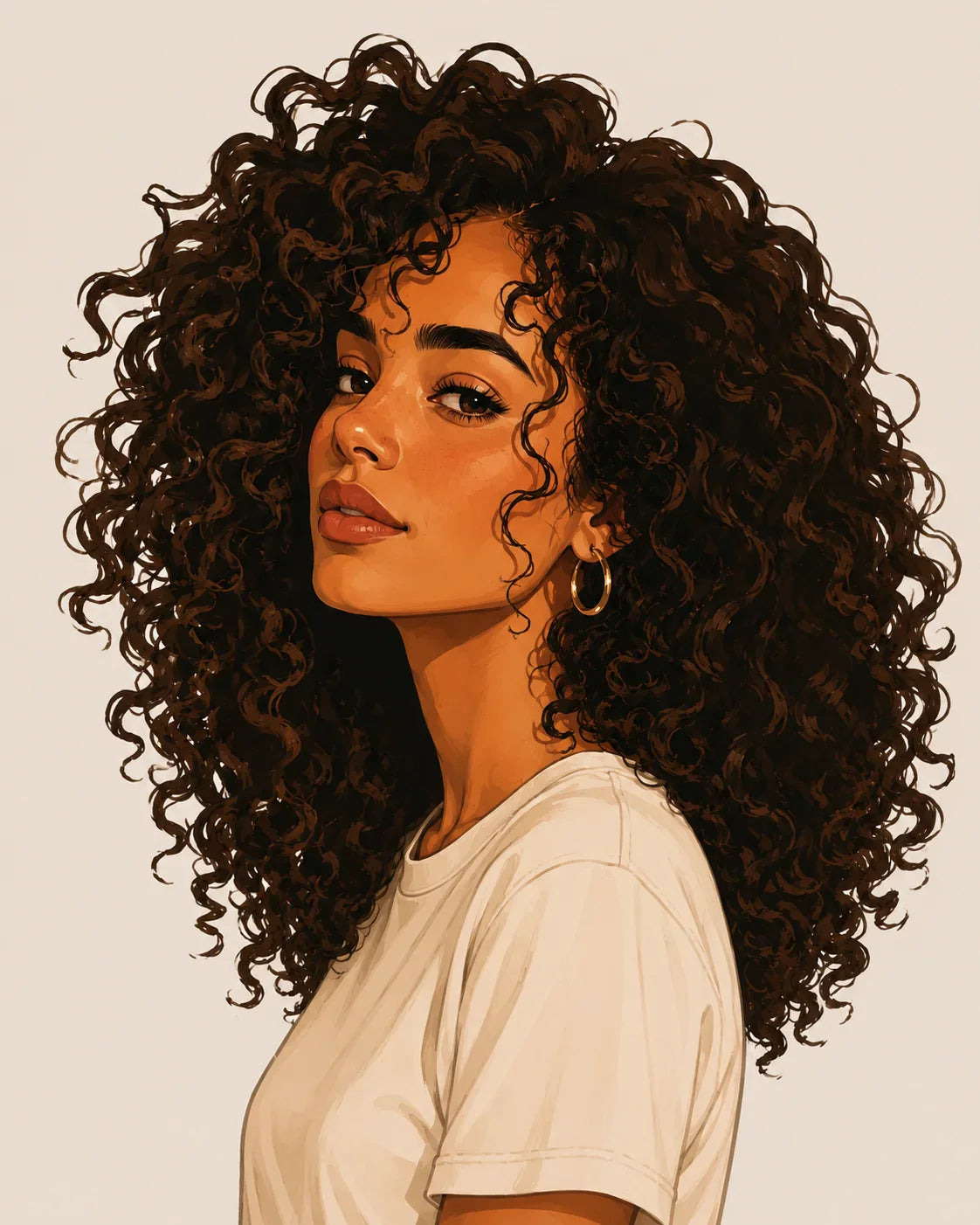
Routine capillaire cheveux bouclés au Maroc : le guide complet
Related Posts
Routine capillaire cheveux ondulés au Maroc : le guide complet
Type Texture Caractéristiques 2A Ondulations légères en S Fines, souples, tendance à s'aplatir rapidement 2B Ondulations plus marquées Volume modéré, légère tendance aux frisottis 2C Ondulations prononcées Plus épaisses, proches du bouclé, frisottis fréquents
Learn moreRoutine capillaire cheveux crépus au Maroc : le guide complet
Type 4A Type 4B Type 4C Aspect Boucles en Z serrées Boucles en Z ou en zigzag, plus serrées Pas de boucle visible, texture très serrée et dense Rétraction (40-55%) Modéré (50-70%) Maximum (60-75%) Besoin principal Hydratation et protéines naturelles de fréquence régulière Hydratation intence+protéines naturelles Hydratation intense + protéines naturelles protection renforcée Fréquence de lavage 1 fois par semaine 1 fois par semaine 1 fois tous les 7 à 10 jours Texture produit recommandée Moyenne Moyenne à riche Riche à très riche
Learn moreDefining Your Curly Hair Type: The Complete Guide
Quick Summary Every curl is unique! Knowing if your hair is 2A, 3B, or 4C helps you choose the right care and avoid damaging mistakes. Discover how to identify your curl type, test porosity, and create a natural routine for hydrated, defined, and vibrant curls, even under the Moroccan sun and hard water. 1. The 2A to 4C Classification: Identify Your Profile Before choosing the right products, it's essential to understand your curl type. Each hair type has its specific needs, and quick visual identification can help you better adapt your Naturiam routine. Curl types Type 2 – Wavy (2A to 2C): These hairs have slight waves to a "beach hair" effect. Challenge: maintain natural volume and movement without weighing down the waves. Type 3 – Curly (3A to 3C): Spiral or corkscrew curls, moderately tight. Challenge: tame frizz while maintaining perfect curl definition. Type 4 – Coily (4A to 4C): Very tight curls, Z-shaped or small springs. Challenge: fight extreme dryness and shrinkage while preserving suppleness. Summary table: Diagnosis, Needs and Frequent Errors Type Visual Texture Main Need Recommended Naturiam Product Frequent Error 2A - 2C S-shaped waves Volume & Lightness Leave-in + Marshmallow Jelly Products too heavy that flatten the waves 3A - 3C Defined curls Hydration & Bounce Curly Hair Routine Brushing or manipulating dry, which breaks the curls 4A - 4C Tight spirals / Z Nutrition, repair & Suppleness Protein Mask + Protein Leave-in Neglecting hydration or using too much heat 2. Beyond curl type: Its size Knowing your curl type (2A to 4C) is not always enough. Hair thickness (fine, medium, or thick) plays an essential role in how your hair reacts to products and care. How to tell if your hair is fine, medium, or thick? Fine hair Your hair is almost invisible when you hold it between your fingers. It's light, soft, but tends to lack volume and get greasy quickly. Tip: avoid heavy products, prioritize light textures. Medium hair (normal) It's neither too fine nor too thick. Easy to style, it generally holds curls well and tolerates different types of products. Tip: you can balance hydration and nutrition. Thick hair The hair is clearly visible and more resistant. It may seem dry or difficult to manage, but it holds the shape of the curls well. Tip: use rich products to nourish and control volume. Quick test: Take a single strand of hair between your fingers You barely feel it → fine You feel it slightly → medium You feel it clearly → thick Once you know your hair thickness, you can adopt a complete routine adapted to effectively hydrate, nourish, and define your curls. Discover the Naturiam curly hair routine 3. The 5 Mistakes That "Break" Your Curls (Regardless of Your Type) Even if you know your curl type and hair thickness, some habits can damage your curls daily. Here are the 5 most common mistakes to avoid: Using classic towels Thick towels rub hair and cause frizz. Opt for a microfiber towel or an old cotton t-shirt to gently dry your curls. Detangling dry No matter your hair type, dry detangling breaks the hair fiber and creates frizz. Prefer gentle detangling with your fingers or a wide-tooth comb on damp hair. Overusing heat Straighteners and irons permanently alter the natural structure of your curls. Limit heat and always use a heat protectant. Neglecting the scalp A healthy scalp promotes vibrant curls. Cleanse and exfoliate regularly with gentle products, ideally containing salicylic acid. Sleeping on cotton Cotton absorbs moisture and forms knots. Prefer a satin or silk pillowcase to preserve your curls and reduce frizz. 4. Which Naturiam routine for my Hair Type? Adopting a routine tailored to your hair type is essential for healthy, hydrated, and defined curls. Here's a clear guide according to each profile: Hair Type Routine / Key Treatments Adapted Routine Techniques / Methods Objective / Expected Result Wavy (2A-2C) Light, water-based textures (Marshmallow Aloe Vera, Horsetail) Pink Routine Apply to damp hair, avoid heavy products Natural volume, light and airy waves Curly (3A-3C) Vegetable ceramide, green tea, plant extract Green Routine Scrunching or with brush, leave-in + gel Defined, supple, and bouncy curls Coily (4A-4C) Amino acids Deep repair and hydration Gray Routine Long-lasting hydration, sealed with oil + L.O.C Method (Liquid, Oil, Cream) Nourished, hydrated curls and less shrinkage To complete your routine, discover our collections of products for each hair type and give your curls the hydration they deserve 5- Curls in Morocco: what water and climate really do to your hair Living in Morocco means exposing your curls to unique factors like intense sun, dry air, or hard water. These elements can alter the texture, health, and appearance of your hair if you don't protect them properly. Hard water: a real challenge for curls The lime present in tap water or hammams can dry out your hair, making curls frizzy and dull. Solution: rinse your hair with filtered or lukewarm water, use hydrating treatments and suitable leave-ins to restore balance. Intense sun: beware of UV rays In southern Morocco, the sun can weaken the hair fiber and increase the risk of breakage. Tip: use protective sprays like “L’Oréal Professionnel Thermo-modeling Spray or ghd Heat Protect Spray”, light oils or hats to protect your curls from UV rays. Dry air and heat Hot and dry air promotes moisture loss and shrinkage (curls contracting). Advice: regularly hydrate your hair and apply oils or gels to seal in water and keep curls supple. Treatments adapted to the Moroccan environment Adjust your routine according to the season and exposure to sun or hard water. Combine hydration, protection, and hold for radiant curls despite the climate. Curls not holding? Discover the 7 common mistakes and how to fix them for defined, bouncy, and long-lasting hair Conclusion Knowing your hair type is the first step towards vibrant, hydrated, and lively curls. Each curl has its specific needs, and adapting your routine to your profile allows you to avoid frizz, breakage, and dryness. Discover the Naturiam.ma shop and find the perfect pack for your curls! FAQ - Frequently Asked Questions Does hammam water damage curls? Yes, hot, hard water can dry out your hair and weaken curls. Remember to rinse with lukewarm water and apply a moisturizing treatment after the hammam. Can I have multiple curl types on the same head? Absolutely! It's common to have different textures, but generally there's a dominant texture that serves as the basis for choosing the appropriate routine. Can my hair type change over time? Yes, your hair can evolve with age, hormones, or the care it receives. Stay attentive to its behavior to adjust your routine. What characterizes coily hair? Coily hair forms spiral curls, has a medium texture, can dry out easily, and requires moisturizing care to remain supple and defined. How to define my curls naturally without heat? Use light moisturizing products, scrunch your curls on damp hair, and let them air dry or under a gentle diffuser. Avoid straighteners and opt for gentle methods like the L.O.C technique or twist-outs for coily hair.
Learn more